
Metaphors for chaos help students, teachers, and writers describe confusion, disorder, and unpredictability when plain words feel too weak. Sometimes, life feels messy or out of control, and it becomes hard to keep up with the whirlwind of emotions, events, or thoughts.
This kind of feeling is called chaos. Writers use special comparisons called metaphors to describe chaos in clear and relatable ways.
Metaphors for Chaos
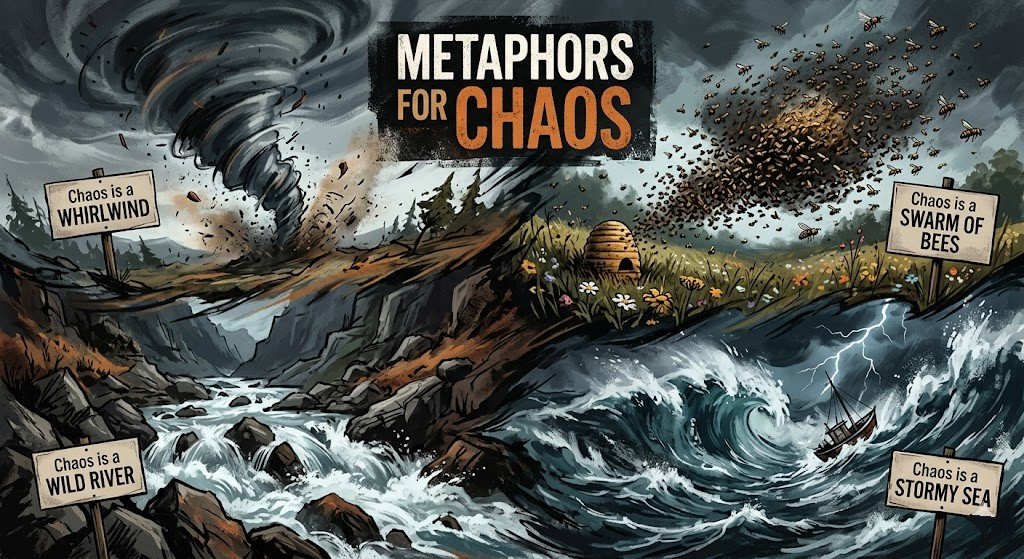
A metaphor says one thing is something else, even if it isn’t true, to help people better picture what’s really going on and express the disorder that often defines our experiences.
1. Chaos is a whirlwind
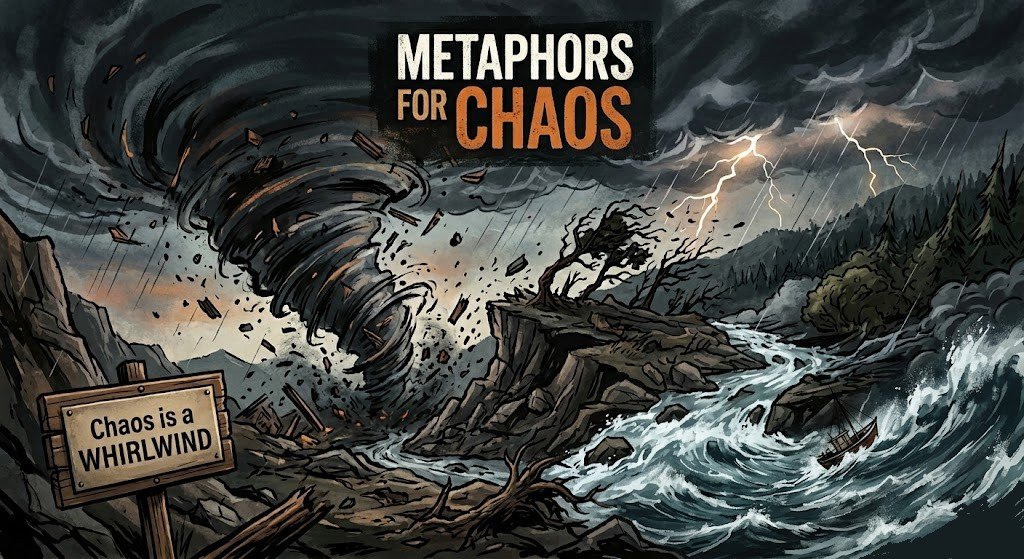
Meaning: Chaos is a powerful force that breaks the norm and fosters innovation.
In a sentence: Chaos invites us to discover new opportunities amidst uncertainty.
Other ways to say: Chaos can be described as tumult, upheaval, or disorder.
2. Chaos is a tangled knot.
Meaning: Chaos represents the unpredictable elements of life that can lead to unexpected growth.
In a sentence: Chaos is the intricate web of unpredictability that invites exploration and innovation.
Other ways to say: Chaos can be described as a whirlwind, a tempest of uncertainty, or a complex puzzle waiting to be solved.
3. Chaos is a swarm of bees.
Meaning: Chaos resembles a swarm of bees in its dynamic and unpredictable nature while still showcasing a hidden order.
In a sentence: Just like a swarm of bees can be chaotic yet purposeful, chaos often holds the potential for unexpected creativity.
Other ways to say: Chaos resembles a bustling hive, unpredictable yet guided by an underlying purpose.
4. Chaos is a shattered mirror.

Meaning: Chaos represents disorder that can reveal deeper insights and truths.
In a sentence: Chaos is a shattered mirror reflecting fragmented realities that challenge our understanding.
Other ways to say: Chaos is like a broken prism, revealing truths hidden within disorder.
5. Chaos is a wild river.
Meaning: Chaos symbolizes the unpredictable and transformative forces in life.
In a sentence: “Chaos is a wild river that challenges us to navigate uncertainty and reveals hidden opportunities.”
Other ways to say: “Chaos is a tumultuous current, a vibrant storm, or an untamed force of nature.”
6. Chaos is a stormy sea.
Meaning: Chaos is an intense state of disorder that challenges and transforms us.
In a sentence: Life’s chaos can be likened to a stormy sea, where unpredictability breeds resilience and creativity.
Other ways to say: Chaos is a turbulent journey; disorder is the crucible for growth.
7. Chaos is a tangled forest.
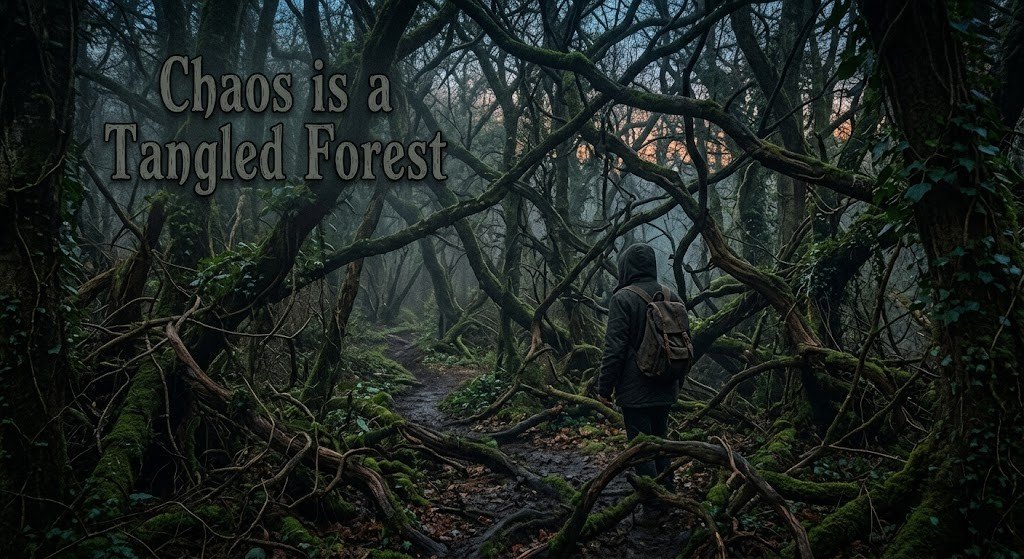
Meaning: Chaos reflects the complexity and unpredictability of life, much like a tangled forest.
In a sentence: Navigating chaos is akin to finding one’s way through a dense, intertwined forest where hidden opportunities await.
Other ways to say: Disorder can be a teacher, revealing unexpected possibilities and insights within the tangled web of life.
8. Chaos is a broken clock.
Meaning: Chaos represents a state of disorder that can paradoxically offer moments of clarity and creativity.
In a sentence: Like a broken clock, chaos reminds us that disorder can lead to unexpected insights.
Other ways to say: Chaos is akin to a malfunctioning watch, signaling that even disruption has its moments of truth.
9. Chaos is a swarm of ants.
Meaning: Chaos embodies disordered energy that can also signify hidden potential.
In a sentence: Chaos is a swarm of ants: frenzied yet purposeful.
Other ways to say: Disorder resembles a flurry of activity, where unpredictability breeds innovation.
10. Chaos is a jigsaw puzzle.
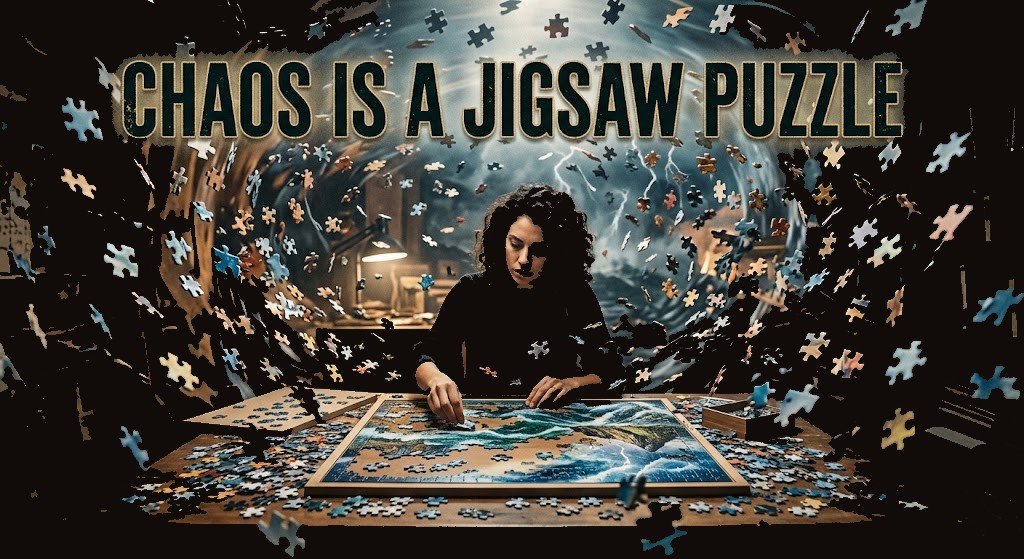
Meaning: Chaos offers a pathway to deeper insights.
In a sentence: Chaos is a jigsaw puzzle waiting to be solved.
Other ways to say: Chaos is a complex puzzle filled with potential.
11. Chaos is a fireworks display.
Meaning: Chaos is the unexpected beauty in events that appear disordered but culminate in spectacular experiences.
In a sentence: Life’s chaos resembles a fireworks show, with each unpredictable moment holding the potential for awe and discovery.
Other ways to say: Chaos can be likened to art in motion, unpredictable creativity, or a symphony of surprise.
12. Chaos is a tangled web.
Meaning: Chaos represents the complexity and unpredictability of life, transforming disorder into potential.
In a sentence: Chaos is a dynamic force that blends disorder with creativity, leading to unexpected growth.
Other ways to say: Chaos can be viewed as an intricate tapestry of opportunities amid confusion.
13. Chaos is a flock of birds.
Meaning: Chaos embodies a complex interplay of disorder and beauty, often revealing hidden harmony.
In a sentence: Chaos is like a flock of birds, illustrating how disorder can create unexpected beauty and connection.
Other ways to say: Disorder resembles a collective dance, showcasing the elegant unpredictability of life.
14. Chaos is a pot of boiling water.
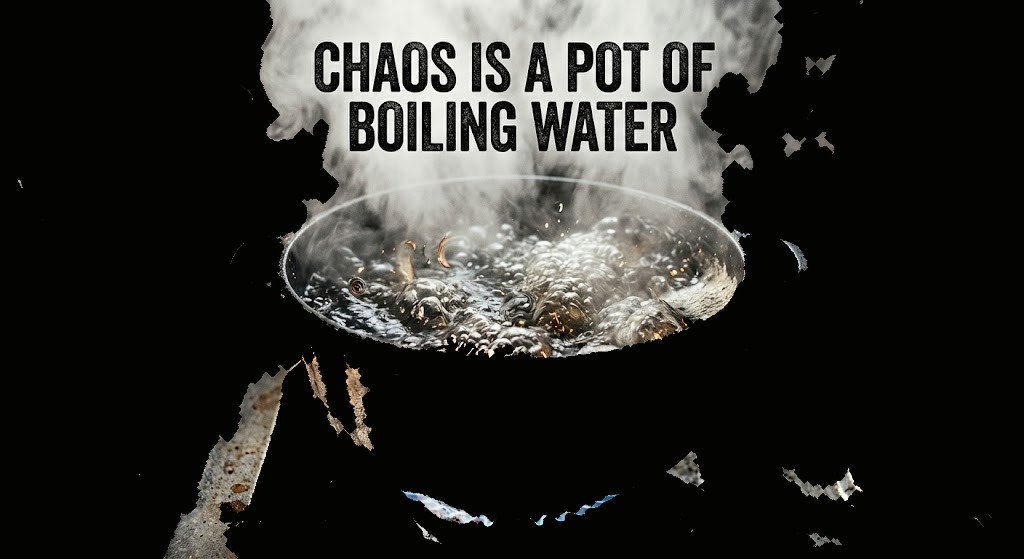
Meaning: Chaos represents a state of disorder and confusion that can ultimately lead to transformation.
In a sentence: Chaos is the catalyst that pushes us beyond our comfort zones into realms of innovation.
Other ways to say: Turbulence, upheaval, or turmoil can also convey the essence of chaos.
15. Chaos is a house of cards.
Meaning: Chaos is a precarious state that can lead to sudden shifts but may also spark creativity.
In a sentence: Chaos acts like a fragile house of cards, where a minor shift can yield both risk and innovation.
Other ways to say: Chaos mirrors the instability of a house of cards, revealing both vulnerabilities and opportunities for growth.
16. Chaos is a busy intersection.
Meaning: A busy intersection symbolizes the unpredictable nature of life’s challenges and the potential for transformation amid chaos.
In a sentence: Navigating life’s chaotic moments can lead to unexpected growth and renewed clarity.
Other ways to say: A chaotic intersection represents life’s tumultuous crossroad, where opportunities for growth abound.
17. Chaos is a loud symphony.
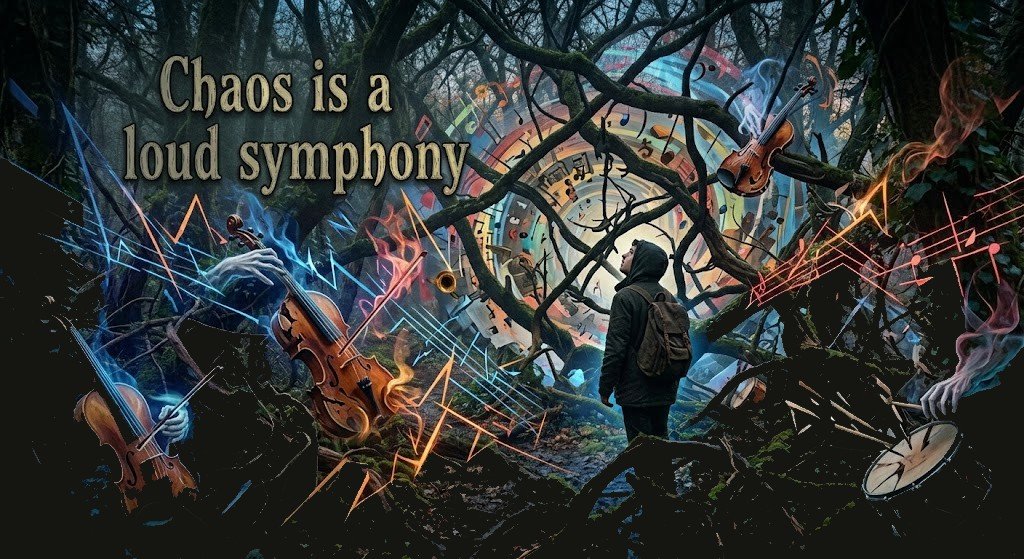
Meaning: Chaos represents the vibrant and often messy interplay of conflicting elements that can lead to innovation.
In a sentence: “Chaos is a loud symphony of discordant notes that ultimately harmonizes into something beautiful.”
Other ways to say: “Chaos is a raucous orchestra of tumult that inspires unexpected creativity.”
18. Chaos is a tangled fishing line.
Meaning: Chaos reflects a complex disorder that can inspire creativity and growth when navigated thoughtfully.
In a sentence: “Chaos is a tangled fishing line, symbolizing the intricate challenges that lead to unexpected insights.”
Other ways to say: “Disorder is a messy web,” or “Confusion is a knotted rope.”
19. Chaos is a swarm of mosquitoes.
Meaning: Chaos is an unpredictable state full of conflicting elements.
In a sentence: “The project descended into chaos, much like a swarm of mosquitoes buzzing around with no clear direction.”
Other ways to say: Anarchy, confusion, tumult, disorder.
20. Chaos is a maze.
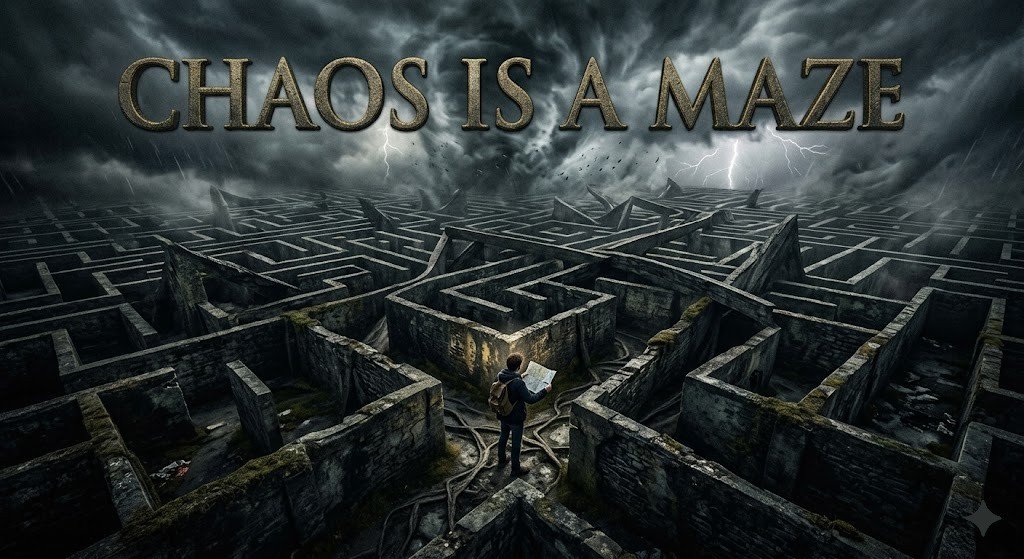
Meaning: Chaos as a maze signifies the complex and unpredictable nature of life, where order often emerges from disorder.
In a sentence: In the maze of chaos, every confusion can lead to unique discoveries and solutions.
Other ways to say: “Chaos is a labyrinth,” or “Disorder is a complex puzzle.”
21. Chaos is a tornado.
Meaning: Chaos embodies a state of complete disorder and confusion, often creating a pathway for unforeseen opportunities.
In a sentence: Chaos is like a tornado, both destructive and a unique opportunity for transformation.
Other ways to say: Turbulence, upheaval, disorder, mayhem.
22. Chaos is a tangled web.
Meaning: Chaos symbolizes the unpredictable and complex interconnections in life.
In a sentence: Life’s unpredictable nature often resembles a chaotic web of intertwined events.
Other ways to say: Disarray forms an intricate tapestry of intertwined challenges and possibilities.
23. Chaos is a bustling beehive.
Meaning: Chaos, much like a bustling beehive, signifies a complex environment where diverse elements work together, often leading to unexpected creativity and progress.
In a sentence: A beehive’s chaos illustrates the beauty of interconnected roles and the potential for growth amidst disorder.
Other ways to say: A hive of activity, a whirlwind of life, a flurry of energy.
24. Chaos is a stormy sea.
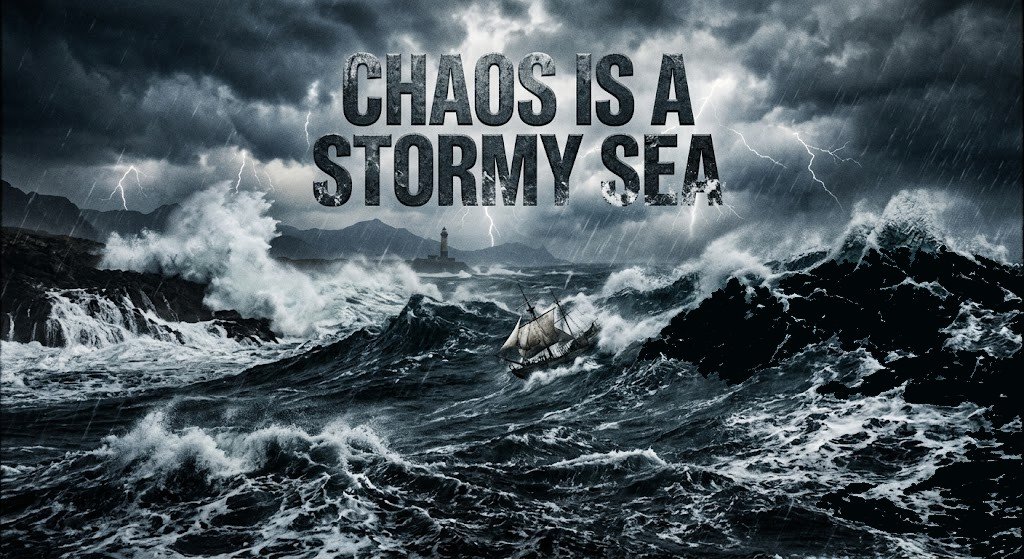
Meaning: Chaos symbolizes an unpredictable force that can herald growth and transformation.
In a sentence: “Chaos is a stormy sea that, while turbulent, can reveal new horizons when we learn to navigate it.”
Other ways to say: “Disorder is a tumultuous ocean that necessitates our growth and adaptability.”
25. Chaos is a tangled knot.
Meaning: The notion of chaos as a tangled knot suggests complexity and the intertwined, unpredictable nature of life.
In a sentence: Chaos can be visualized as a tangled knot, symbolizing the complexities and intricacies that challenge our perceptions and push for growth.
Other ways to say: Chaos is a web of complexities, a labyrinth of confusion, or a swirling mix of unpredictability.
26. Chaos is a maze.
Meaning: Chaos serves as a complex navigation system through life’s uncertainties, ultimately leading to growth.
In a sentence: Navigating through chaos is akin to navigating a maze; each twist and turn holds the potential for discovery.
Other ways to say: Chaos can be viewed as a labyrinth that offers opportunities for ingenuity and resilience.
27. Chaos is a swarm of ants.
Meaning: Chaos can represent a dynamic, disorganized event with potential for growth and creativity.
In a sentence: “Chaos is a swarm of ants, illustrating how individual chaos can create a greater tapestry of movement and energy.”
Other ways to say: “Chaos resembles a frenzy of ants, highlighting the beauty beneath the disorder.”
28. Chaos is a tangled forest.
Meaning: A tangled forest symbolizes the complexity and unpredictability of life’s challenges.
In a sentence: Chaos is a tangled forest, representing the intricate and multifaceted nature of our experiences.
Other ways to say: Chaos resembles a dense thicket, embodying the intricacies and unpredictable twists in our lives.
Exercise to Practice
- When the classroom was in chaos, it felt like a ____________.
- During rush hour, the crowded streets resembled a ____________.
- Thanksgiving dinner prep turned the kitchen into a ____________.
- Trying to solve the math problem felt like untangling a ____________.
- The playground during recess was a buzzing ____________.
- Navigating through the crowded mall felt like finding your way through a ____________.
- Balancing work, school, and extracurricular activities felt like building a house of ____________.
- The argument left their friendship feeling like a shattered ____________.
- The crowded cafeteria during lunchtime was like a ____________.
- Trying to organize the group project felt like navigating a ____________.
- Solving the mystery felt like unraveling a ____________.
Answers:
- tornado
- bustling beehive
- stormy sea
- tangled knot
- swarm of ants
- maze
- cards
- mirror
- beehive
- wild river
- tangled web
Conclusion
The metaphors for chaos serve as a profound reminder of the intricate dance between disorder and clarity in our lives. Each metaphor invites us to delve deeper into the human experience, encouraging us to reflect on how we interpret and respond to the chaos surrounding us.
The imagery of wildfires, mazes, and swirling eddies stirs our imagination and enlightens our perspective. As we explore these varied expressions, we gain wisdom that can turn our chaotic moments into opportunities for transformation. Embrace the chaos, and let it propel you toward a more balanced and insightful path.