
In this article, we will explore 10 metaphors for students that can not only clarify complex concepts but also ignite a passion for learning. In the world of education, these creative comparisons transform understanding and engagement for students. These metaphors are a brilliant way to bring life to learning.
Best Metaphors for Students:
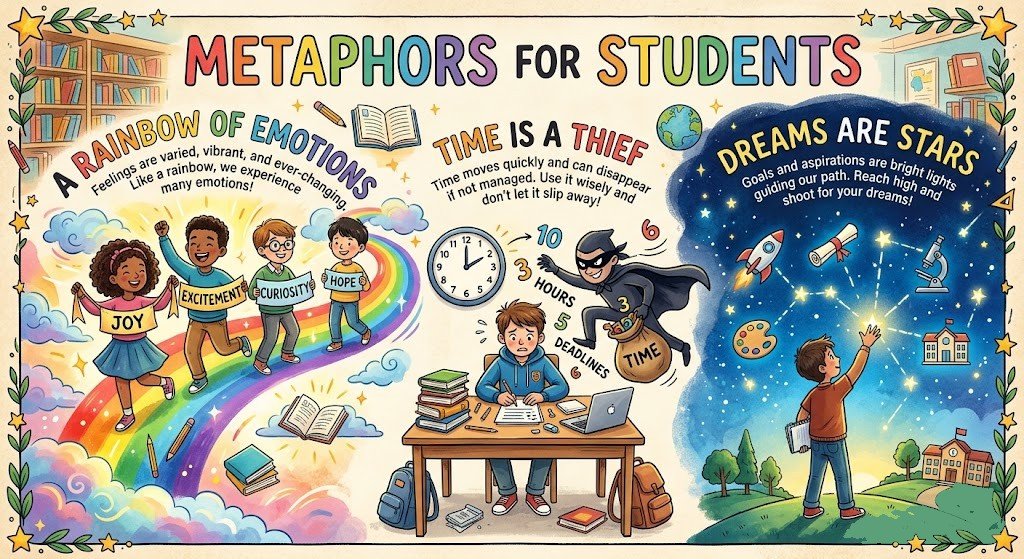
15 short and best metaphors for students are given below. Each metaphor for a student has its own unique meaning and example.
1. A Rainbow of Emotions
Meaning:
This metaphor describes the emotions as a colourful rainbow.
How to use in a sentence:
She experienced a rainbow of emotions, feeling as joyful as the sun breaking through after a rain shower.
Different ways to say:
a spectrum of feelings.
2. Time is a Thief
Meaning:
This metaphor describes the time to be a thief as it passes quickly without getting noticed and steals moments.
How to use in a sentence:
The weekend flew by like a thief in the night.
Different ways to say:
Time is like a stealthy robber.
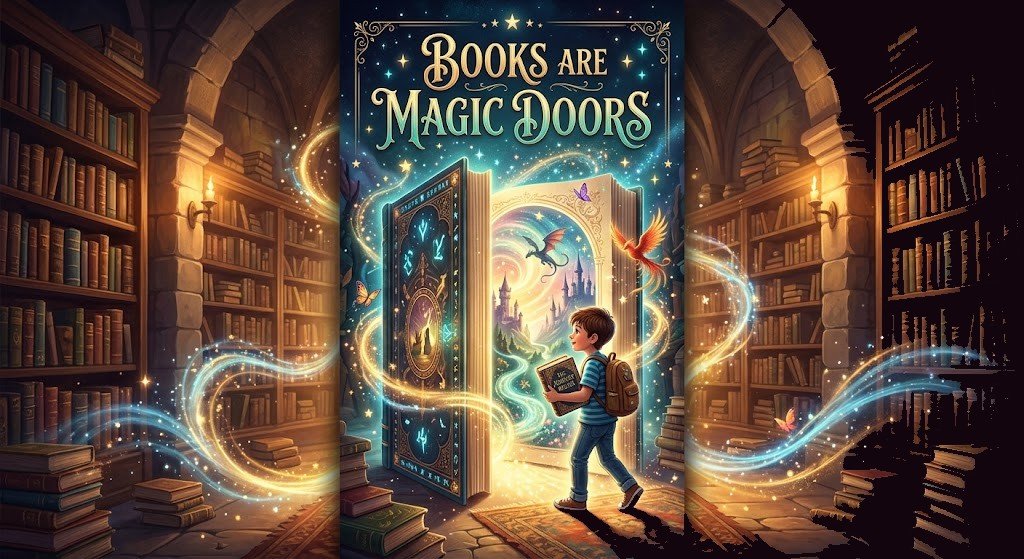
3. Books are Magic Doors
Meaning:
This metaphor portrays books as magic doors because they offer escape to imaginary wonderlands and also knowledge that can shape the world like a magical spell.
How to use in a sentence:
Books are magic doors that transport you into a realm of creativity and wonder the moment you open one.
Different ways to say:
Books are enchanting portals.
4. Dreams are Stars
Meaning:
This metaphor describes dreams as shining stars that give us hope and inspiration to chase our goals.
How to use in a sentence:
Josh let her dreams shine like bright stars in the night and worked hard to convert those into reality.
Different ways to say:
Aspirations are like stars in the sky.
5. Friendship is a Garden

Meaning:
This metaphor describes friendship as a garden that is beautiful but also needs care to grow.
How to use in a sentence:
Friendship is a garden, and true friends are like its flowers.
Different ways to say:
Friendship resembles a garden.
6. Learning is a Journey
Meaning:
Learning is a journey filled with unexpected bends and curves.
How to use in a sentence:
Learning is a long journey that demands patience, hard work, and steadfastness.
Different ways to say:
The path to knowledge is very long.
Related post: Metaphors for building
7. Challenges are Mountains

Meaning:
This metaphor portrays the challenges as high mountains.
How to use in a sentence:
The challenges on the way to success are like mountains, high and frightening, but once you climb up, the view is worth the struggle.
Different ways to say:
Obstacles are Peaks.
8. Knowledge is a Light
Meaning:
This metaphor describes knowledge as a light that guides us in the dark and brings understanding.
How to use in a sentence:
Knowledge serves as a light in a shadowy space, guiding you forward.
Different ways to say:
Acquiring new knowledge is like illuminating hidden realities.
9. Curiosity is a Key
Meaning:
Curiosity opens doors to fresh possibilities and insights.
How to use in a sentence:
Curiosity is the key that opens up a world of limitless opportunities.
Different ways to say:
Curiosity is like unlocking a vast storehouse of insights.
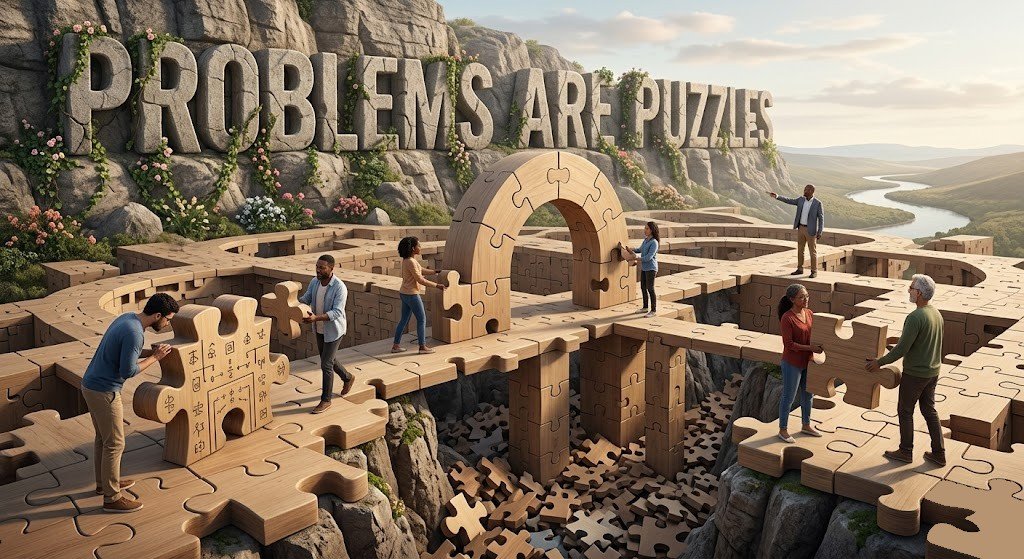
10. Problems are Puzzles
Meaning:
This metaphor describes problems as pieces of a puzzle that require mental effort, resulting in sharpening your skills.
How to use in a sentence:
Addressing problems is akin to solving puzzle pieces that uncover a larger image.
Different ways to say:
Each challenge has the possibility of a resolution, similar to assembling a jigsaw puzzle.
You can read motivational quotes for students here.
Exercise to Practice
- When you are facing a difficult math problem, you should think of your __________ as a key that unlocks the solution.
- Imagine your weekend plans as a colorful __________ stretching across the sky, waiting to bring you joy.
- Picture your upcoming science project as a fascinating __________ waiting to be explored.
- Consider your goals for the school year as seeds that, with hard work, will grow into beautiful __________.
- Visualize your confidence during a presentation as a suit of __________, protecting you from nerves.
Answer Key
- mind
- rainbow
- galaxy
- flowers
- armor
Conclusion
These 10 metaphors for students serve as powerful tools to enhance students’ understanding and engagement in their learning journey. Each metaphor illuminates a different aspect of learning, making it easier for students to grasp complex ideas in a relatable manner.