
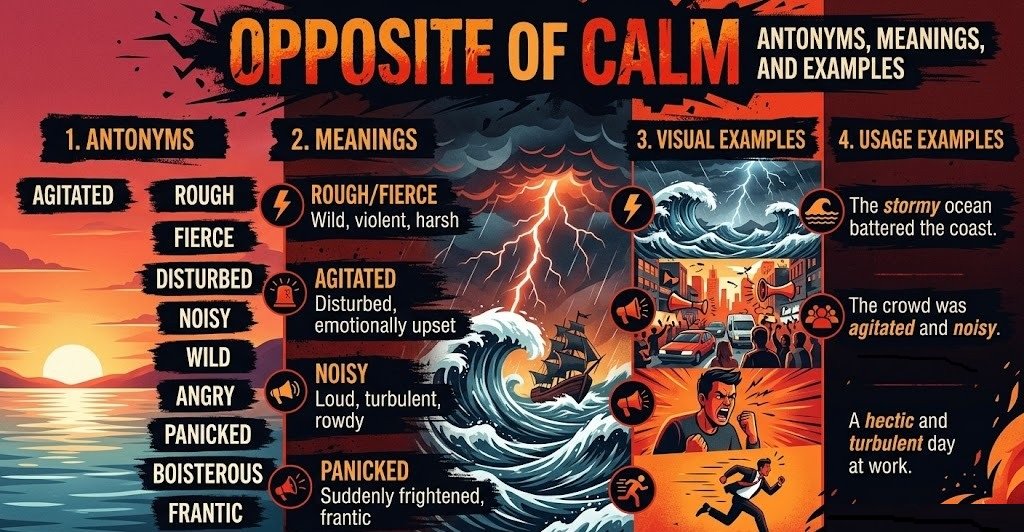
The word calms refers to the peace and quitness but it does not remain the same all the time. Sometimes the situation is very intense and noisy. In these situations, we use the antonyms or the opposite of calm, like anxious, nervous, and chaotic. While calmness can feel like a remote dream, grabbing its antonyms can empower you to express those chaotic feelings. This article delves into the calm antonyms in English, explaining their meanings and providing relatable examples. By the end, you’ll have a richer vocabulary and a deeper understanding of how these words apply to your own experiences.
Meaning of Calm
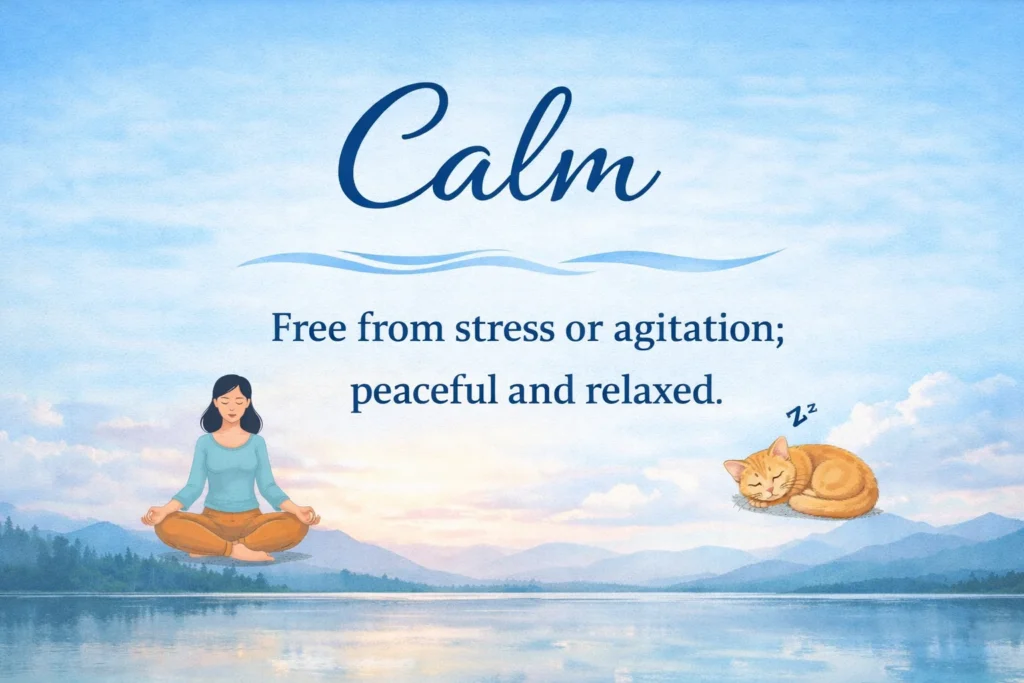
The word calm means quietness or peace. Calmness is often misconceived as mere absence of chaos, but it is a profound state of inner peace that cuts across external circumstances. Embracing calm means cultivating strength, where challenges are met not with panic but with an unwavering sense of equilibrium.
Why Knowing the Opposite of Calm Matters
Understanding the opposites or antonyms of calm can describe the situation more accurately. Vocabulary becomes strong after learning different words. By acknowledging these words, we can know better what calm is not and can express our feelings in conversation or writing more clearly. Learning calm antonyms sharpens our ability to communicate with others.
Antonyms of Calm with Meaning And Example
There are hundreds of other words for calm, and also antonyms for calm, but here are a few given below:
| Antonyms | Meaning | Example |
| Agitated | Feeling disturbed | He looked agitated after the exams. |
| Restless | Unable relax | My son was restless during the long journey. |
| Chaotic | Full of confusion and disorder | The cafeteria became chaotic due to the rush. |
| Anxious | Feeling worried | She was anxious for me. |
| Tense | Stretched tight | The tense environment in our house made him sick. |
| Excited | Full of strong emotions or energy | I was too excited about the school. |
| Uneasy | Lacking comfort | He felt uneasy at night. |
| Noisy | Loud and disturbing | The classroom was very noisy today. |
| Stressed | Under pressure or strain | They were stressed before the meeting. |
| Disturbed | Troubled | I was disturbed by the loud music. |
| Wild | Uncontrolled or untamed | The wild crowd cheered loudly in the stadium. |
| Irritated | Easily annoyed | He was irritated by the drum beaters. |
| Disorderly | Lacking organization | The disorderly protest blocked the roads. |
| Emotional | strongly affected by feelings | She became emotional after watching the movie. |
| Frenzied | wildly excited | I was frenzied during the concert. |
Emotional Antonyms of Calm
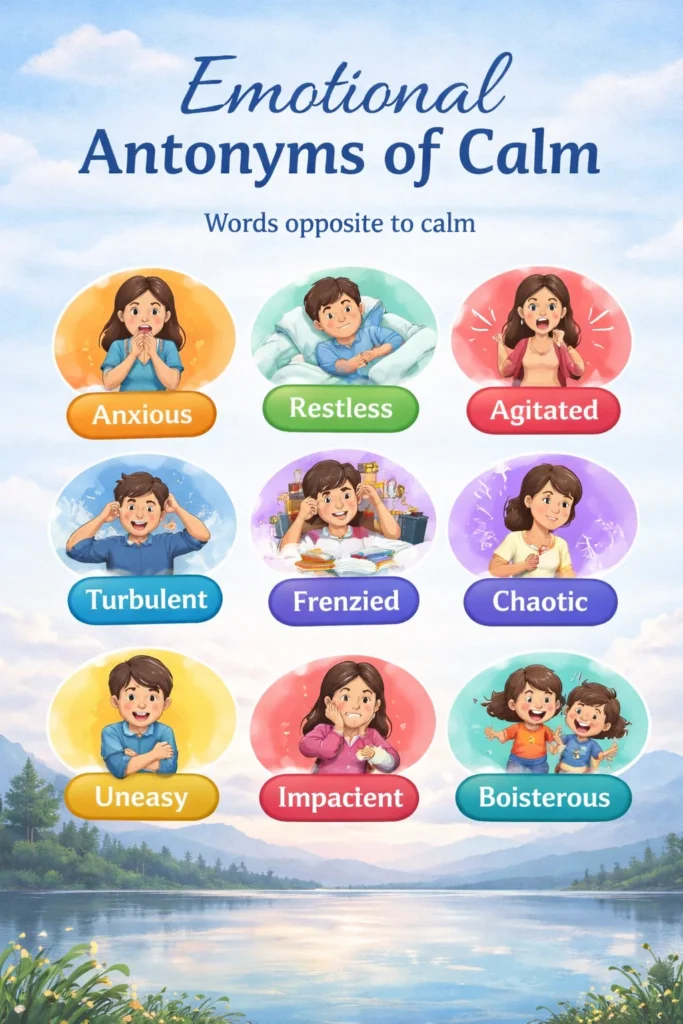
A few emotional opposites of calm in English are given below to strengthen vocabulary and better communication.
- Anxious – worried.
Example: He was anxious when his dad lost his memory. - Nervous – easily agitated or tense.
Example: They felt nervous before the match. - Irritated – annoyed or disturbed.
Example: The constant noise made her irritated. - Stressed – pressured or overwhelmed.
Example: She felt stressed about his love. - Restless – unable to relax emotionally.
Example: Jack grew restless waiting for the call. - Agitated – emotionally disturbed or shaken.
Example: I was agitated during the concert. - Tense – emotionally strained.
Example: The tense silence filled the room. - Excited – full of strong feelings.
Example: The children were excited about the tour. - Uneasy – uncomfortable in mind.
Example: He felt uneasy in the dark alley. - Emotional – strongly moved by feelings.
Example: She grew emotional while sharing her story.
Behavioral Antonyms of Calm
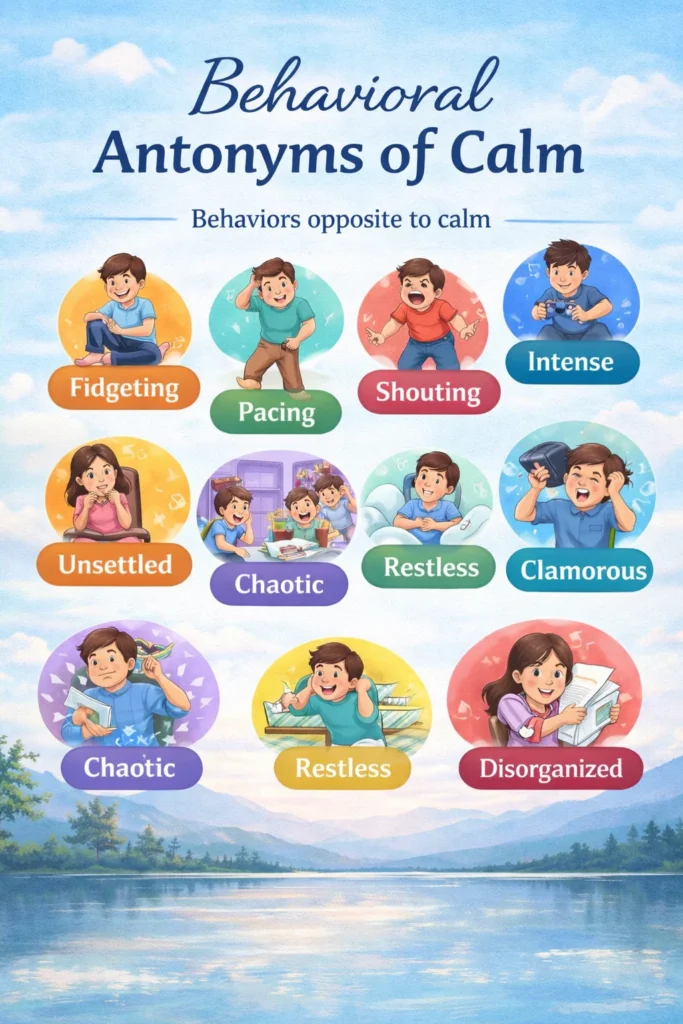
- Chaotic – behaving in disorder.
Example: Her chaotic actions confused me. - Reckless – careless and wild.
Example: He was reckless in our house. - Aggressive – forceful, hostile behavior.
Example: Her aggressive behavior made him pay the fine. - Rowdy – noisy and disorderly.
Example: The rowdy group disrupted the class. - Impatient – unable to wait calmly.
Example: I was impatient for the results. - Disorderly – lacking control in behavior.
Example: The disorderly students were sent out of class. - Frenzied – acting in wild excitement.
Example: The frenzied children rushed into the store. - Boisterous – loud, energetic, and unruly.
Example: The boisterous kids played in the garden. - Irrational – behaving without reason or calmness.
Example: Her irrational anger surprised me. - Hysterical – overly emotional or uncontrollable behavior.
Example: He became hysterical after she broke up.
Environmental Antonyms of Calm
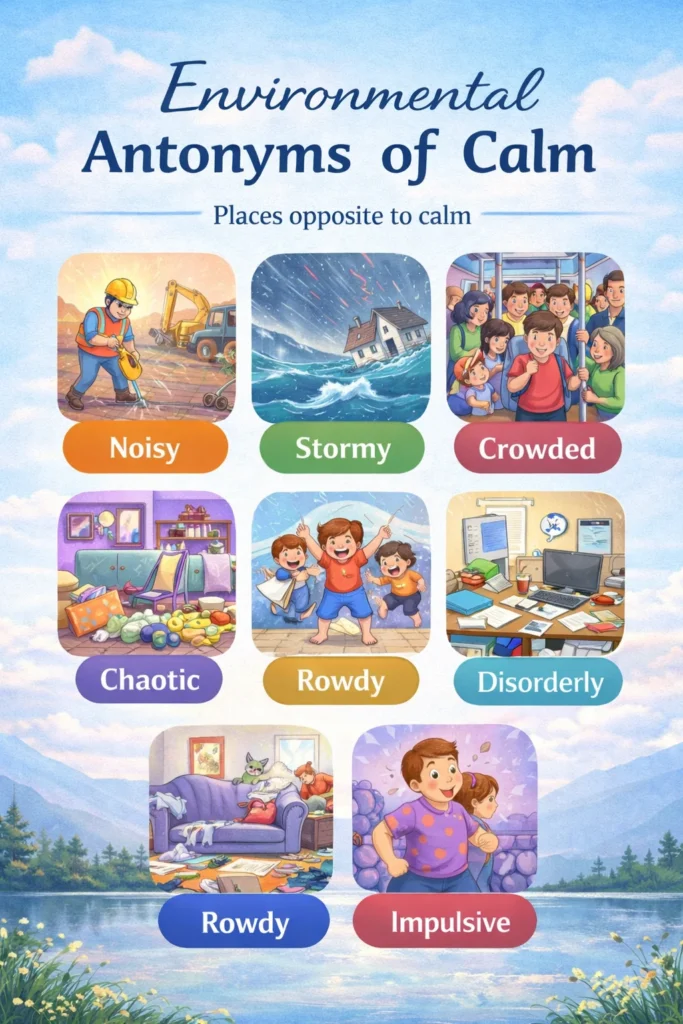
- Noisy – filled with disturbing sounds.
Example: The noisy traffic gave me a headache. - Stormy – marked by violent weather.
Example: The stormy night kept me frightened. - Chaotic – full of disorder and confusion.
Example: The chaotic class was overwhelming. - Turbulent – rough or disturbed, often with motion.
Example: The plane faced turbulent weather. - Busy – full of activity and movement.
Example: I was very busy last weekend. - Crowded – packed with people or objects.
Example: The crowded subway was hard to navigate. - Loud – producing a high volume of sound.
Example: The loud concert kept me disturbed the whole night. - Disturbing – causing interruption or discomfort.
Example: The disturbing noise came from the music concert. - Wild – untamed and uncontrolled.
Example: The wild ocean waves crashed against the rocks. - Unsettled – not stable or peaceful.
Example: The unsettled weather delayed the trip.
Usage Rules for Antonyms of Calm
- Match context carefully – Some antonyms are emotional (anxious, nervous), some are behavioral (rowdy, aggressive), and some are environmental (noisy, turbulent). Use the antonyms according with situation.
- Use correct intensity – Words like frenzied or chaotic are stronger than restless or uneasy. Choose based on how extreme the situation is.
- Avoid redundancy – Don’t pair antonyms unnecessarily (e.g., “restless and uneasy” together may sound repetitive).
- Maintain tone – In formal writing, prefer words like tense, disturbed; in casual speech, rowdy, restless might work better.
- Be precise – Use noisy for sound, turbulent for motion, stressed for feelings.
Common Mistakes When Using Antonyms of Calm
- Substituting a negative term for a real antonym (for example, “not calm” for restless or disturbed).
- Wrongly combining environmental and emotional antonyms (e.g., “The weather was anxious”; anxiety characterizes humans, not weather).
- Strong antonyms are overused in moderate contexts (e.g., labeling a somewhat busy café “chaotic”).
- Confusing phrases that are similar (for example, anxious and nervous both imply unsettled, but anxious implies a more serious concern).
Antonyms of Calm Quiz
1. After the long journey, he finally felt calm instead of being _____.
A) Relaxed
B) Restless
C) Peaceful
D) Quiet
2. The sea was peaceful today, unlike its usually _____ waves.
A) Calm
B) Gentle
C) Turbulent
D) Smooth
3. She remained calm during the exam, not at all _____.
A) Confident
B) Relaxed
C) Anxious
D) Happy
4. The classroom was quiet, not _____ as it had been during the celebration.
A) Silent
B) Calm
C) Boisterous
D) Peaceful
5. He spoke in a calm voice, rather than sounding _____.
A) Peaceful
B) Relaxed
C) Agitated
D) Quiet
6. The crowd was calm and orderly, not _____ as expected.
A) Peaceful
B) Controlled
C) Frenzied
D) Quiet
7. She felt relaxed and comfortable, not at all _____.
A) Calm
B) Uneasy
C) Happy
D) Settled
8. The event was well-organized, not _____ like last year.
A) Planned
B) Ordered
C) Chaotic
D) Structured
9. He waited patiently in line, instead of being _____.
A) Calm
B) Relaxed
C) Impatient
D) Quiet
10. After the discussion, the situation became stable, not _____.
A) Peaceful
B) Calm
C) Settled
D) Unsettled
Answer key of the Quiz:
- Restless
- Turbulent
- Anxious
- Boisterous
- Agitated
- Frenzied
- Uneasy
- Chaotic
- Impatient
- Unsettled
Conclusion
The concept of calm encloses a sense of peace and silence, making its antonyms particularly fascinating. Words like chaos, turbulence, and agitation convey a stark contrast to this calmness, highlighting the emotional and mental states we all experience. Each of these terms carries unique implications, whether it’s the wild energy of chaos or the underlying tension of unease. By understanding these oppositions, we can better appreciate the significance of calm in our lives. Embrace the calm where you find it, and strive to cultivate it even in the middle of the storm.