
There are different funny phrases to express surprise. In this article, we’ll explain 30 creative idioms for surprise with meanings and examples that will improve your vocabulary, enhance your writing skills, and make your English sound more fluent and expressive. In everyday conversations and creative writing, idioms for surprise make expressions more colorful and engaging. From hearing unexpected news to witnessing something unbelievable, these idioms help describe reactions in a fun and natural way.
Idioms for Surprise
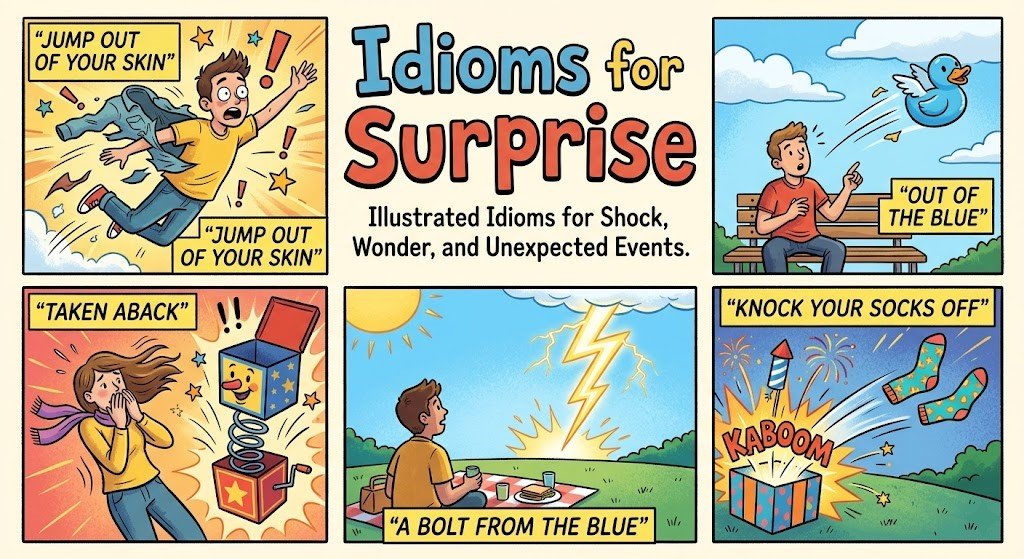
There are 30 unique idioms for surprise given below. Each idiom for surprise has its own meaning and example in a sentence.
1. Jump out of your skin
Meaning: To experience extreme shock.
In a Sentence:
- She almost jumped out of her skin when her phone rang.
- He jumped out of his skin after hearing a bomb explosion.
- I jumped out of my skin when lightning struck the roof.
Other Ways to Say: Suddenly shocked.
2. Taken aback
Meaning: Suddenly surprised.
In a Sentence:
- I was taken aback when my father called me first.
- She was taken aback when she saw the huge crowd.
- I was taken aback to see my old friend.
Other Ways to Say: Unexpected.
3. Out of the blue
Meaning: Something happens completely unexpectedly.
In a Sentence:
- Out of the blue, it started raining on a sunny day.
- The job offer came out of the blue, and he wasn’t prepared for it.
- The written test about shocked idioms came out of the blue.
Other Ways to Say: All of a sudden.
4. Knock your socks off

Meaning: To deeply impress someone.
In a Sentence:
- The special effects in that movie will knock your socks off.
- Her unexpected kindness truly knocked my socks off.
Other Ways to Say: To amaze.
5. A bolt from the blue
Meaning: A sudden event or news.
In a Sentence:
- Her decision to get admission in the university was a bolt from the blue.
- Winning the scholarship was a bolt from the blue for him.
- Her phone call in the middle of the night was a bolt from the blue.
Other Ways to Say: Unexpected event.
6. Blow your mind
Meaning: To be extremely surprised.
In a Sentence:
- Her knowledge of science can really blow your mind sometimes.
- His driving blew my mind.
- The life story of my friend was so inspiring that it might blow your mind.
Other Ways to Say: Shock you.
7. Drop a bombshell

Meaning: To suddenly reveal something shocking.
In a Sentence:
- Max dropped a bombshell when he announced he was moving abroad next month.
- The cricket coach dropped a bombshell by revealing he would retire after the season.
- My mom dropped a bombshell by saying she is going out of the country.
Other Ways to Say: Tell something unexpected.
Also, check idioms about space for better vocabulary.
8. On the edge of your seat
Meaning: Eagerly expecting what will happen next.
In a Sentence:
- They were on the edge of their seats waiting for the final exam results.
- Fans were on the edge of their seats as the singer announced the winner.
Other Ways to Say: Being so excited.
9. Take you by surprise
Meaning: To happen unexpectedly.
In a Sentence:
- The test on the topic of surprise idioms took me by surprise.
- The sudden loud thunderclap took me by surprise.
- The test on Thursday took us by surprise.
- Her singing talent took the judges by surprise.
Other Ways to Say: Catching you off guard.
10. Can’t believe your eyes
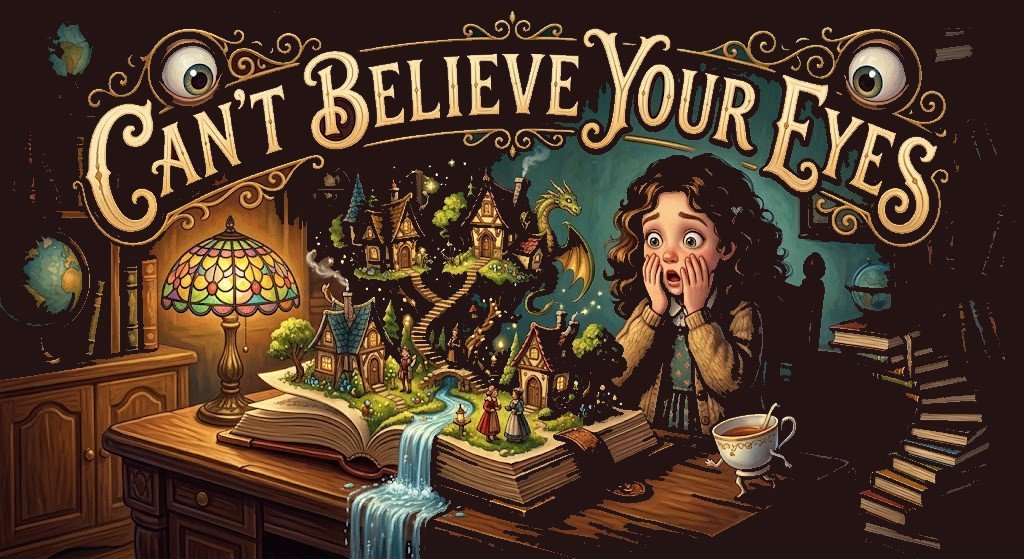
Meaning: Incredibly shocked.
In a Sentence:
- He couldn’t believe his eyes after winning the scholarship.
- I couldn’t believe my eyes at how tall the tower was.
- The teacher can’t believe his eyes after checking my sudden idioms test.
Other Ways to Say: Stunned by something.
Also, check idioms for essay writing to improve your writing skills.
11. At a loss for words
Meaning: Being temporarily speechless.
In a Sentence:
- I was at a loss for words when I won the scholarship.
- The beauty of the sunset left me at a loss for words.
- He stood at a loss for words after hearing the unexpected news.
Other Ways to Say: Don’t know what to say.
12. Hit the roof
Meaning: To become extremely angry.
In a Sentence:
- He hit the roof after seeing the huge phone bill.
- Dad hit the roof when I spilled paint on the bed.
Other Ways to Say: Outraged.
13. Like a deer in headlights

Meaning: Someone who is so startled.
In a Sentence:
- She froze like a deer in headlights when she saw the surprise test on the desk.
- They looked like deer in headlights when the ball came at them.
Other Ways to Say: Stunned.
14. Fall off your chair
Meaning: To be extremely surprised.
In a Sentence:
- I almost fell off my chair when I saw my name on the marks list.
- He fell off his chair after hearing about the test for surprise idioms.
- He fell off his chair laughing at his ridiculous joke.
Other Ways to Say: Shocked and amazed.
15. Shake like a leaf
Meaning: To shake uncontrollably.
In a Sentence:
- She was shaking like a leaf before my turn on stage.
- He stood in the cold rain, shaking like a leaf, waiting for the bus to arrive.
- I was shaking like a leaf during the viva.
Other Ways to Say: Feel nervous.
16. Hold your breath
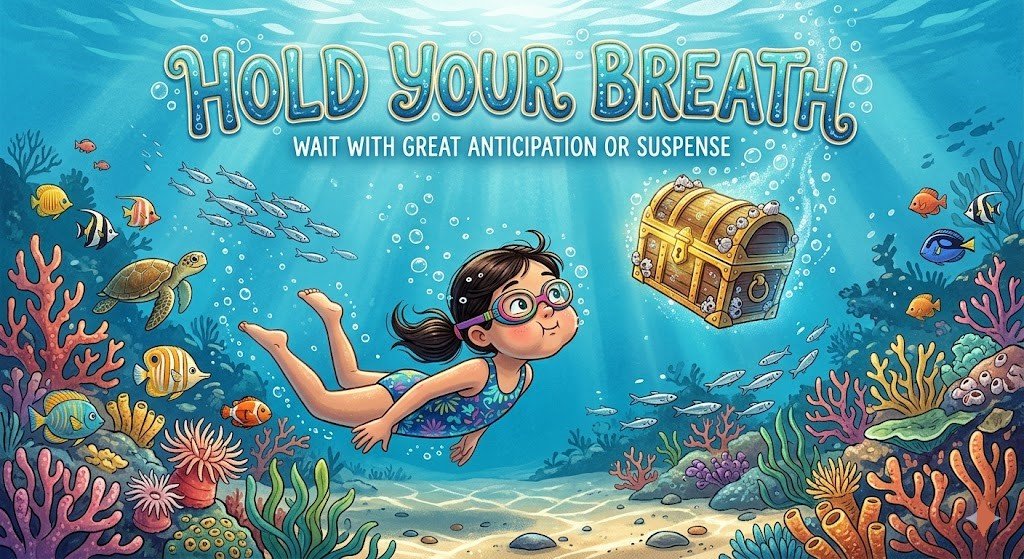
Meaning: Waiting anxiously for an event.
In a Sentence:
- He held her breath while waiting for the exam results to be announced.
- We held our breath when the teacher walked in.
Other Ways to Say: Wait nervously.
17. Eyes pop out
Meaning: Extremely shocked.
In a Sentence:
- When he saw the price of the new bike, his eyes nearly popped out of his head.
- My eyes almost popped out after seeing the huge birthday gift.
- My eyes popped out with excitement when the teacher asked for a test about shocking idioms.
Other Ways to Say: Can’t believe what you see.
18. Lost your cool
Meaning: To suddenly lose your temper.
In a Sentence:
- My brother lost his cool after someone scratched his new car.
- I lost my cool when I saw my brother was using my computer.
Other Ways to Say: Lose control, Hit the roof.
19. Eyes like saucers
Meaning: Having very large and wide eyes as a physical reaction to strong emotions.
In a Sentence:
- Jack stared at the giant cake with eyes like saucers.
- The cat looked up at the fireworks with eyes like saucers.
- She walked into the haunted house with eyes like saucers, terrified by every sound.
Other Ways to Say: Wide-eyed.
20. Gasp in shock

Meaning: To suddenly inhale a sharp breath of air.
In a Sentence:
- He gasped in shock when he saw the sudden explosion in the distance.
- The audience gasped in horror as the movie started.
- She gasped in shock when the lights went out.
Other Ways to Say: React loudly.
Related Article: Idioms for the ear
21. Catch someone off guard
Meaning: To surprise someone when they are not expecting it.
In a Sentence:
- The sudden question during the interview caught him off guard.
- The price increase caught me off guard.
Other Ways to Say: Come by surprise.
22. Blow out of the water
Meaning: To utterly defeat an opponent.
In a Sentence:
- He blew the competition out of the water this quarter.
- My presentation about idioms for surprise in English blew the competition out of the water.
- The athlete’s performance blew everyone else out of the water at the championship.
Other Ways to Say: Impress fully.
23. Mind-blowing

Meaning: Something extremely exciting.
In a Sentence:
- The special effects in that new sci-fi movie were absolutely mind-blowing.
- The special effects in your presentation were truly mind-blowing.
- Watching the sunrise from the roof was a truly mind-blowing experience.
Other Ways to Say: Amazing.
24. A turn of events
Meaning: Unexpected change in a situation.
In a Sentence:
- In a strange turn of events, the team won the championship.
- The company’s finances took an unexpected turn after the new CEO took over.
- No one predicted such a turn of events in the final moments of the trial.
Other Ways to Say: Unexpected moment.
25. Face turns white

Meaning: Look yellow from surprise.
In a Sentence:
- When the teacher asked me about funny idioms for surprise, my face turned white.
- My face turned white after hearing the news about my brother’s accident.
- Her face turned white when she lost her phone.
Other Ways to Say: Shocked.
Related Article: Idioms for an Easy Task
26. Taken by surprise
Meaning: To be caught completely off guard by an unexpected event.
In a Sentence:
- The sudden announcement took everyone in the office by surprise.
- They were taken by surprise by the snow day.
Other Ways to Say: Surprised quickly.
27. Blow out of proportion
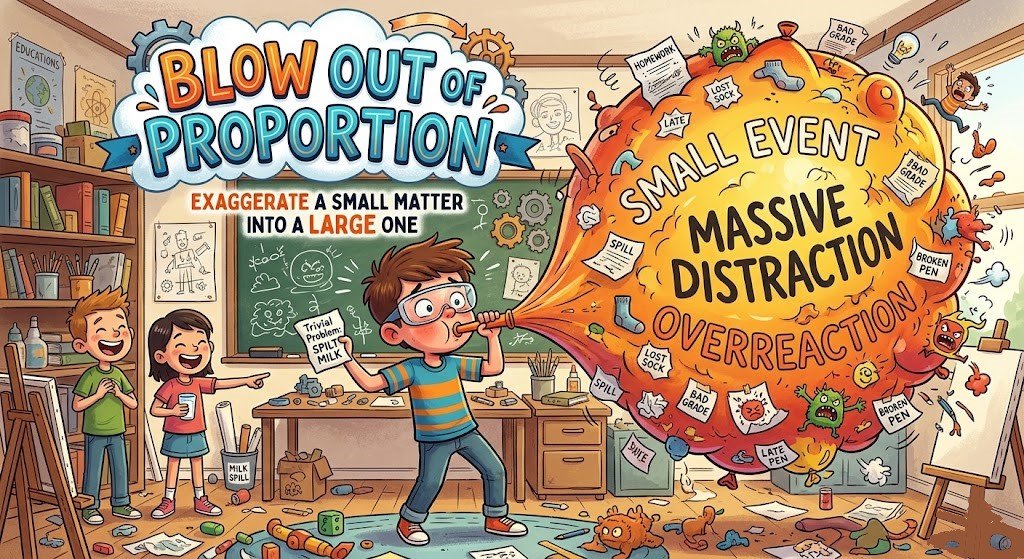
Meaning: To overreact.
In a Sentence:
- He tends to blow problems out of proportion when he is stressed.
- She blew the small mistake out of proportion.
- They blew the prank out of proportion.
Other Ways to Say: Make a big deal.
28. Could hear a pin drop
Meaning: An environment with absolute, profound silence.
In a Sentence:
- Today’s classroom was so quiet during the test that you could hear a pin drop.
- When the vice principal entered the hall, you could hear a pin drop.
Other Ways to Say: very quiet.
29. Something’s fishy
Meaning: To feel surprised.
In a Sentence:
- Something’s fishy about his sudden decision to sell the bike so cheaply.
- It felt fishy when no one answered the door.
- When he avoided answering my questions, I felt something was fishy.
Other Ways to Say: Something feels wrong.
30. A real eye-opener

Meaning: An experience that is highly surprising and teaches you something new.
In a Sentence:
- The school trip was a real eye-opener.
- Watching the news was a real eye-opener
Other Ways to Say: A lesson.
Conclusion:
30 surprise idioms we’ve explored not only enrich our language but also distinctly convey the variation of surprise. Each phrase offers a unique flavor and context, allowing you to express amazement in engaging ways. Whether you’re writing a story, crafting a speech, or simply chatting with friends, these idioms can add depth to your communication. By using them in your everyday conversations, you can elevate your linguistic skills and keep your audience interested.